
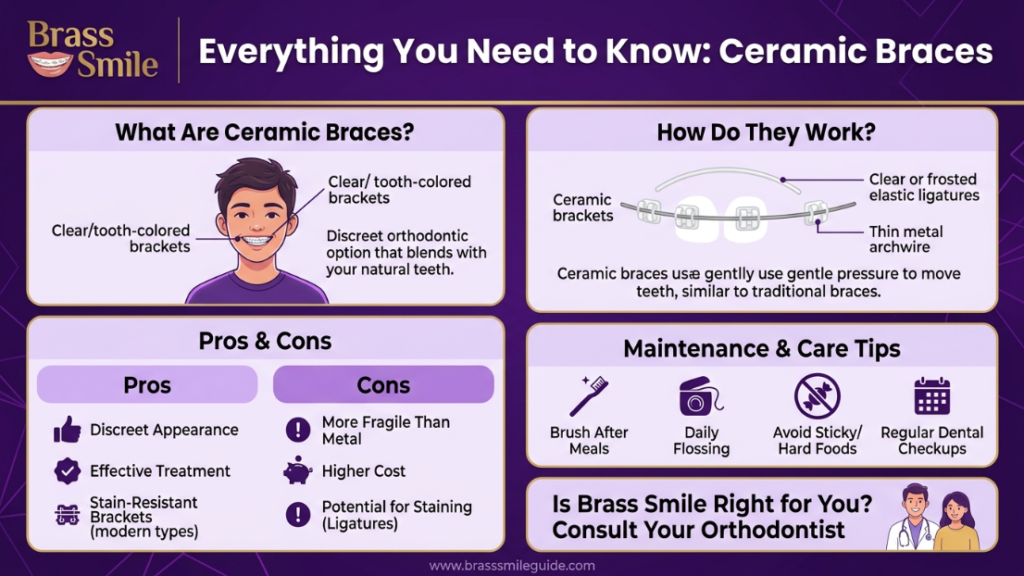
Ceramic braces cost $4,000 to $8,500 on average in the United States. An orthodontist bonds tooth-colored ceramic brackets to the front of your teeth and runs nickel-titanium or stainless steel archwires through them. The setup applies steady pressure to fix malocclusion like crowding, spacing, overbite, underbite, or crossbite over 18 to 24 months in typical cases. They suit teens and adults who want a less noticeable fixed option than metal braces but need more control than removable clear aligners.
You catch yourself smiling in photos and realize the gap between your front teeth or that slight overbite has bothered you for years. If you want braces that blend with your natural tooth color instead of standing out like shiny metal, ceramic braces offer a solid middle ground. Parents of teens, adults heading into meetings, or anyone comparing options will find clear answers here on how ceramic braces work, what they really cost in 2026, daily maintenance, and honest tradeoffs. You will leave ready to talk with an orthodontist about whether they fit your bite and budget.
How Ceramic Braces Work
Ceramic braces straighten teeth the same way metal ones do, but with brackets made from polycrystalline alumina or similar tooth-colored material. The orthodontist places the brackets, threads an archwire, and uses elastics or power chains for extra force where needed.
Treatment follows the same phases you see with other fixed appliances. Phase 1 may start at ages 7–10 for early issues like a narrow jaw that needs a palatal expander. Most patients enter Phase 2 around age 11 or later for full correction. The retention phase begins once brackets come off, with a custom retainer worn full-time at first, then nights only.
Materials Used in Ceramic Braces
Brackets use advanced ceramic that resists staining better than older versions. Archwires shift from flexible nickel-titanium early on to stiffer stainless steel later. Clear or tooth-colored ligatures hold everything in place. The FDA has cleared these components for safe, long-term use in the United States.
Ceramic Braces: Aesthetic Benefits and Tradeoffs
Ceramic braces deliver a discreet look that many patients love. The brackets match your tooth shade so they fade into your smile instead of flashing metal every time you talk or laugh.
Durability Concerns and Staining Risks
Ceramic brackets hold up well for everyday use but can chip if you bite into hard candy or ice. They cost more to replace than metal ones. Staining hits the clear elastic ligatures more than the brackets themselves—coffee, tea, curry, or smoking can tint them between visits. Most orthodontists switch to fresh ties every 4 to 8 weeks to keep things bright.
Ceramic Braces vs Clear Aligners
Ceramic braces stay fixed on your teeth 24/7 so you never worry about forgetting to wear them. Clear aligners like Invisalign or Spark give you the freedom to remove trays for meals and brushing, but they demand strict compliance—22 hours a day minimum.
For mild crowding or spacing, aligners often finish treatment faster. Ceramic braces handle moderate to complex bites, rotations, or bite corrections with more predictable force. A 14-year-old with crowding and an overbite may finish straighter in 18 months with ceramic braces than with aligners alone. Adults who travel or eat out frequently sometimes prefer the set-it-and-forget-it nature of fixed ceramic braces.
Ceramic Braces Cost and Pricing Guide
Ceramic braces cost $4,000 to $8,500 on average in the United States in 2026. The price sits roughly $1,000 higher than metal braces because of the specialized materials and slightly longer chair time for adjustments.
What Drives Price Up or Down
Complex cases with extractions or orthognathic surgery increase costs. Shorter treatments for minor spacing keep them lower. Coastal cities run 20–30% higher than the national average; check the state cost index on Brass Smile for your area.
Insurance, HSA/FSA, and Payment Options
Dental plans usually limit orthodontic benefits to patients under 19 and set a $1,000–$3,000 lifetime maximum. You can tap HSA or FSA dollars tax-free for the entire amount.
Without full coverage, discount dental plans, orthodontic schools like UCLA or University of Michigan, and office payment plans help. Expect 20–30% down and $100–$300 monthly over 18–36 months. Many clinics offer CareCredit for interest-free financing.
Hidden Costs to Budget For
Plan on $150–$600 for retainers once treatment ends. A broken bracket visit runs $50–$150. Lost elastics or wax replacements stay cheap but add up if you skip appointments.
Daily Care Routine for Ceramic Braces
Brush after every meal with a soft brush and fluoride toothpaste. A water flosser on low setting cleans under the archwire where traditional floss struggles—most patients get one by the second month.
Foods to Avoid and Maintenance Tips
Skip hard foods that can crack brackets and sticky ones that pull ligatures loose. Top ceramic brace brands like 3M Clarity Advanced and American Orthodontics Radiance use stronger ceramics today, but gentle habits still protect them. Rinse with water after dark drinks to cut staining on the ties.
Athletic Protection
A custom mouthguard fits over the brackets and shields both teeth and ceramic material during sports.
About BrassSmile
BrassSmile launched in 2023 after founder Alex Rivera spent two years guiding her own children through orthodontic treatment. She saw the need for honest, independent information that cuts through marketing hype and affiliate blogs.
Editorial Team
- Alex Rivera, Founder & Lead Writer (LinkedIn)
- Dr. Lisa Chen, DMD, ABO diplomate, Medical Reviewer (LinkedIn)
- Jordan Patel, DDS, Content Editor
Every article receives review by a board-certified orthodontist before publication. We update this page every six months or sooner when AAO or ADA guidelines change. We cite only peer-reviewed sources and official data from the American Dental Association (ADA), American Association of Orthodontists (AAO), and CDC dental health statistics.
Frequently Asked Questions
How much do ceramic braces cost without insurance?
Ceramic braces cost $4,000 to $8,500 without insurance in most US markets. You cover the full amount unless you use an in-house plan, discount program, or HSA/FSA funds.
Do ceramic braces stain easily?
The brackets resist staining well, but the clear elastic ligatures can discolor from coffee, tea, or curry between visits. Fresh ties at every adjustment keep the look clean.
Are ceramic braces better than clear aligners?
Ceramic braces work better for complex bites because they stay fixed and apply constant force. Clear aligners suit milder cases but require you to wear them 22 hours a day.
How long do you wear ceramic braces?
You wear ceramic braces for 18 to 24 months on average. Minor spacing may finish in 12 months while severe crowding can take up to 36 months.
Can adults get ceramic braces?
Adults get ceramic braces daily. Healthy gums and bone let them work just as well as they do for teens, and many adults pick them for the discreet appearance.
What foods should you avoid with ceramic braces?
Avoid hard items like ice, nuts, and popcorn plus sticky ones like caramel and gum. Cut firm fruits into small pieces before biting.
Do ceramic braces hurt more than metal braces?
Ceramic braces cause the same soreness for 3 to 5 days after adjustments. The material makes no difference in discomfort levels.
How often do you visit the orthodontist with ceramic braces?
You visit every 4 to 8 weeks for wire changes and progress checks. The orthodontist also replaces any stained ligatures.
What happens after ceramic braces come off?
You receive a custom retainer right away. Wear it full time for several months, then nights only for life to lock in your new bite.
Are porcelain braces the same as ceramic braces?
Porcelain braces and ceramic braces describe the same tooth-colored option. Both terms refer to brackets made from ceramic materials.
Ready for Ceramic Braces?
Ceramic braces give you a straighter smile with less metal flash, solid control over your bite, and a maintenance routine you can master in the first couple weeks. You now know the real costs, staining risks, and how they stack up against clear aligners.
Book a consultation with a board-certified orthodontist or ABO diplomate soon. Bring your insurance details and questions. Read our guide on traditional metal braces next if you want the lowest price, or check how to choose an orthodontist to pick the right provider.
This article is for informational purposes only and is not a substitute for professional dental or orthodontic advice. Always consult a licensed orthodontist for guidance specific to your situation.