
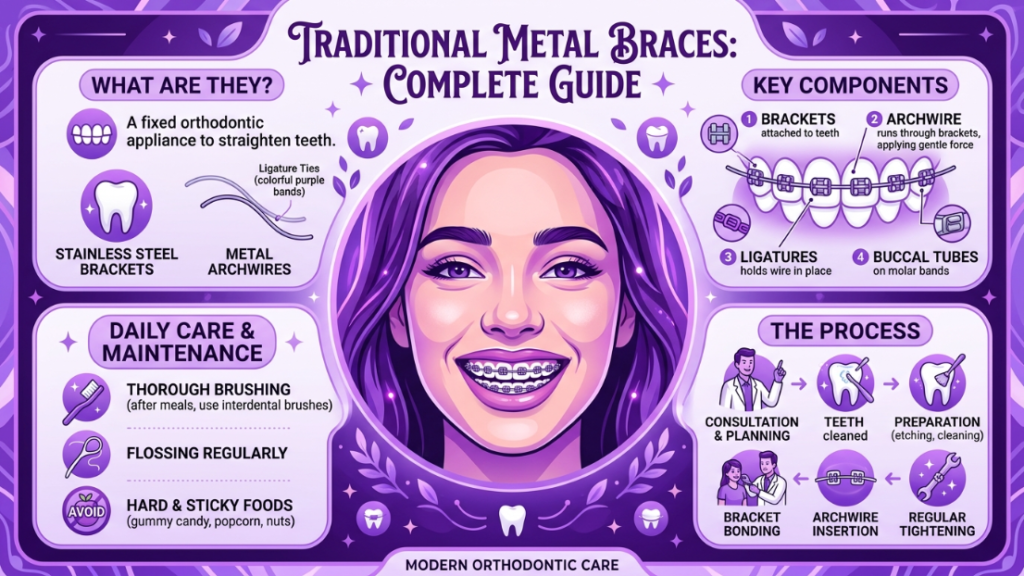
Traditional metal braces cost $3,000 to $7,000 on average in the United States. An orthodontist bonds stainless steel brackets to your teeth and threads nickel-titanium archwires through them. The wires apply gentle pressure that moves teeth into proper alignment over 18 to 24 months in most cases. They suit children, teens, and adults who need reliable correction for crowding, spacing, overbite, underbite, or crossbite.
You probably see those shiny metal smiles on kids at school or on adults who finally decided to fix their bite. If you or your child needs braces, traditional metal braces deliver proven results at a price lower than most alternatives. This guide walks you through exactly how they work, what they cost in 2026, who they fit best, and the real-life adjustments you will make. You will finish knowing how to budget, care for them daily, and choose a qualified orthodontist.
How Traditional Metal Braces Work
Traditional metal braces correct malocclusion by applying controlled force to teeth over time. An orthodontist places small metal brackets on the front of each tooth, then connects them with a flexible archwire. The wire gradually pulls or pushes teeth into better positions while elastics or power chains add extra pressure where needed.
The process breaks into phases. Phase 1 (early treatment) may start as young as age 7 for some children who need a palatal expander or space maintainer. Phase 2 (comprehensive treatment) usually begins around age 11 or later and lasts 18 to 24 months for most patients. The retention phase follows with a custom retainer you wear every night to keep teeth from shifting back.
Materials Used in Traditional Metal Braces
Brackets and bands come from high-grade stainless steel. The archwires start as flexible nickel-titanium that moves teeth comfortably in the early months, then switch to stiffer stainless steel for final alignment. Ligatures (tiny rubber bands or metal ties) hold the wire in place. These materials received FDA approval for long-term use in the United States and resist breaking under normal chewing forces.
Who Traditional Metal Braces Suit Best
Traditional metal braces work well for moderate to severe crowding, spacing, diastema, open bite, deep bite, or crossbite. They give orthodontists precise control that clear aligners sometimes cannot match in complex cases. Adolescents with growing jaws often see the fastest results, but adults also choose them when they want the strongest, most predictable outcome.
You do not need perfect teeth to start. The American Association of Orthodontists (AAO), the professional body that sets standards for orthodontic specialists in the US, recommends a first evaluation by age 7. Early checks catch problems that traditional metal braces can fix before they worsen.
Lifestyle Adjustments with Traditional Metal Braces
You will need to change a few habits. Speech may feel different for the first week until your tongue adjusts to the brackets. You will brush and floss more carefully after every meal. Sports require a mouthguard. Most patients adapt within two weeks and forget the braces are even there.
Cost Breakdown by Age Group
- Children (7–11): $3,000–$5,500. Phase 1 treatment is often shorter and may use a palatal expander first.
- Teens (12–17): $3,500–$6,500. Full Phase 2 treatment covers all permanent teeth.
- Adults (18+): $4,000–$7,000. Longer treatment times and possible TADs (temporary anchorage devices) can raise the price slightly.
What Drives Price Up or Down
Complex cases with extractions, surgery, or orthognathic needs push costs higher. Shorter treatments for minor crowding lower them. Urban areas in California or New York sit 20–30% above the national average; smaller cities in the Midwest often fall below it. Check the state cost index on Brass Smile for your exact area.
Insurance, HSA/FSA, and Payment Options
Most dental plans cover orthodontics only for patients under 19 and cap benefits at a $1,000–$3,000 lifetime maximum. Medicaid and CHIP help in some states for medically necessary cases. You can use HSA or FSA funds tax-free for the full amount.
Without insurance, look at discount dental plans, orthodontic schools such as NYU or University of Michigan, or in-house payment plans. Typical terms include 20–30% down and $100–$300 per month over 18–36 months. Many offices partner with CareCredit for 0% interest options.
Hidden Costs to Budget For
Add $150–$600 for a set of retainers after treatment ends. Emergency visits for a broken bracket run $50–$150. Replacement parts or lost elastics cost little but add up if you skip them.
Daily Care Routine for Traditional Metal Braces
Keep your teeth and brackets clean to avoid cavities or white spots. Brush after every meal with a soft toothbrush and fluoride toothpaste. Use a water flosser on low twice a day—it reaches under the archwire where string floss struggles. Orthodontists recommend this by month two for most patients.
Foods to Avoid
Skip sticky items such as gum, caramel, and taffy. Avoid hard foods including popcorn, nuts, ice, and hard candy. Cut apples and corn on the cob into small pieces instead of biting directly.
Athletic Protection
Wear a custom mouthguard during any contact sport. Your orthodontist can make one that fits over the brackets.
About BrassSmile
BrassSmile launched in 2023 after founder Alex Rivera spent two years guiding her own children through orthodontic treatment. She saw the need for honest, independent information that cuts through marketing hype and affiliate blogs.
Editorial Team
- Alex Rivera, Founder & Lead Writer (LinkedIn)
- Dr. Lisa Chen, DMD, ABO diplomate, Medical Reviewer (LinkedIn)
- Jordan Patel, DDS, Content Editor
Every article receives review by a board-certified orthodontist before publication. We update this page every six months or sooner when AAO or ADA guidelines change. We cite only peer-reviewed sources and official data from the American Dental Association (ADA), American Association of Orthodontists (AAO), and CDC dental health statistics.
Frequently Asked Questions
How much do traditional metal braces cost without insurance?
Traditional metal braces cost $3,000 to $7,000 without insurance in most US markets. You pay the full amount unless you use an in-house plan, discount program, or HSA/FSA funds.
Do traditional metal braces hurt?
Traditional metal braces cause soreness for 3 to 5 days after each adjustment. Teeth feel tenderest 6 to 8 hours later. Over-the-counter ibuprofen and soft foods help. Most patients rate the discomfort as mild.
How long do you wear traditional metal braces?
You wear traditional metal braces for 18 to 24 months in the average case. Minor crowding may finish in 12 months; severe malocclusion can take 36 months.
Can adults get traditional metal braces?
Adults get traditional metal braces every day. Age does not limit treatment as long as gums and bone remain healthy. Many adults choose them for faster, more predictable results than aligners.
What foods should you avoid with traditional metal braces?
Avoid sticky foods like gum and caramel plus hard items such as nuts, popcorn, and ice. Cut firm fruits and vegetables into bite-size pieces.
Are traditional metal braces better than clear aligners?
Traditional metal braces give better control for complex bites and crowding. Clear aligners work well for mild cases but require strict wear compliance.
How often do you visit the orthodontist with traditional metal braces?
You visit every 4 to 8 weeks for adjustments. The orthodontist checks progress, changes wires, and replaces broken parts.
Do traditional metal braces cause tooth decay?
Traditional metal braces do not cause decay if you brush and floss properly. Poor hygiene lets plaque build around brackets and create white spots.
What happens after traditional metal braces come off?
You receive a custom retainer the same day. Wear it full time for the first few months, then nights only for life to keep teeth straight.
Are self-ligating braces the same as traditional metal braces?
Self-ligating braces use a clip instead of rubber ligatures but still qualify as metal bracket braces. They often need fewer adjustments than traditional styles.